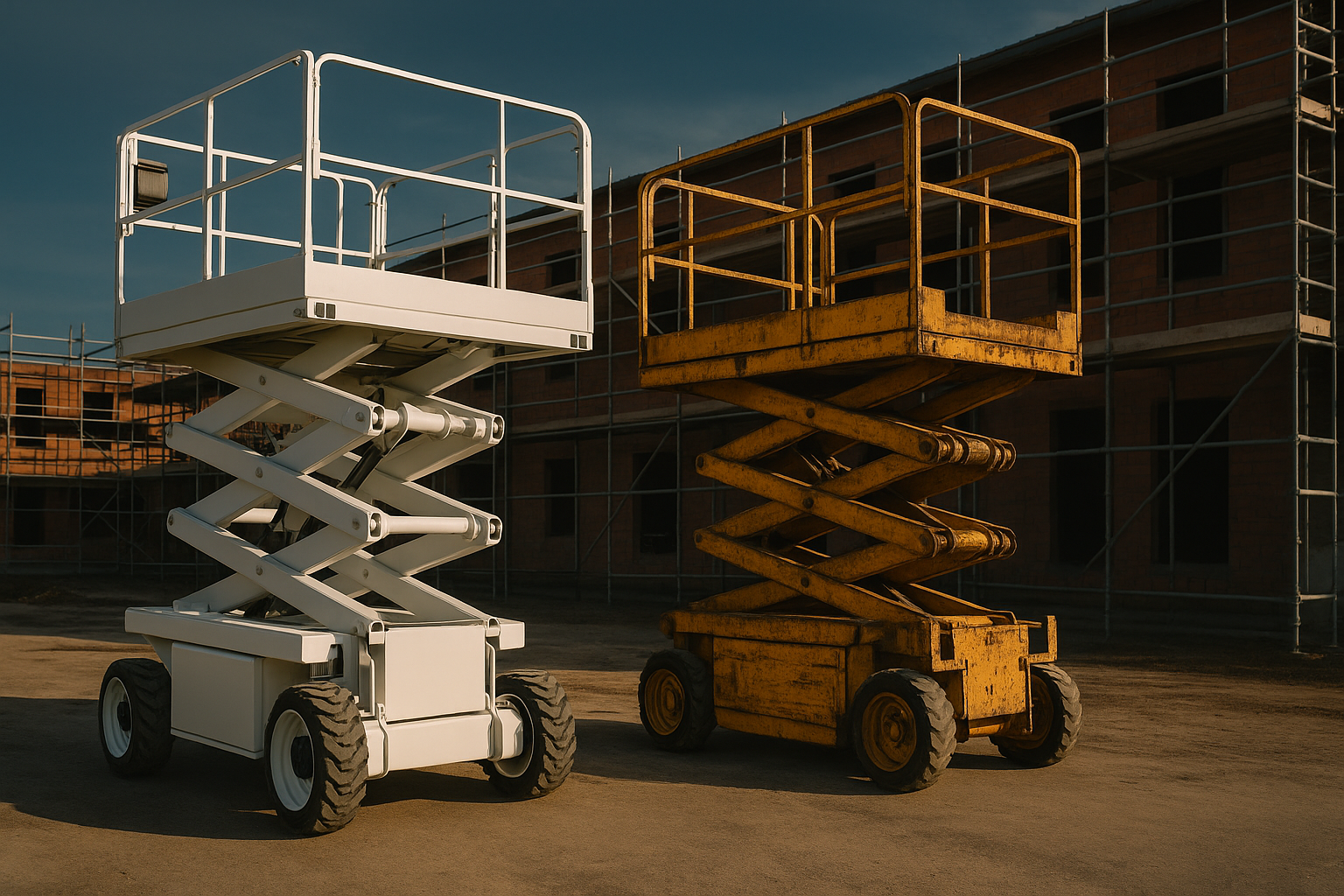
New vs Used Scissor Lift: Which Option Gives Better Value?
One of the most common, and costly, mistakes equipment buyers make is choosing a scissor lift based on sticker price alone. A brand-new machine looks appealing on paper, but it may be overkill for your actual usage. A used model might seem like a bargain until the repair bills arrive. And hiring might be the smartest move of all, depending on how often you actually need the machine.
The reality is that neither new nor used is universally better. In the Australian market, a new scissor lift can cost anywhere from $15,000 to over $90,000, while quality used models often sell for 30–60% less. But purchase price is only one piece of the puzzle.
This guide breaks down the full cost picture, new prices, used prices, hire rates, depreciation, maintenance, safety compliance, and a practical break-even calculation, so you can make a confident, numbers-backed decision.
How Much Does a Scissor Lift Cost to Buy?
A new scissor lift in Australia typically costs between $15,000 and $90,000+, depending on the type, platform height, and brand. A quality used scissor lift can range from $8,000 to $45,000, depending on age, hours of use, and condition. These are significant capital investments, which is why understanding what you’re getting at each price point matters enormously.
New Scissor Lift Prices in Australia
New scissor lift prices vary significantly by platform height and power type. Here’s a general breakdown based on current Australian market conditions (prices as of 2025, always confirm with dealers as pricing fluctuates with exchange rates and supply):
| Machine Type | Platform Height | Approximate New Price (AUD) |
|---|---|---|
| Electric scissor lift (compact) | 6m – 8m | $15,000 – $28,000 |
| Electric scissor lift (mid-range) | 8m – 10m | $28,000 – $45,000 |
| Diesel / rough terrain scissor lift | 10m – 14m | $45,000 – $70,000 |
| Large diesel / rough terrain | 14m – 16m+ | $70,000 – $90,000+ |
Leading brands in the Australian market include Genie, JLG, Haulotte, and Skyjack. Premium brands typically sit at the higher end of each range, while lesser-known manufacturers may offer lower entry points but with less established parts and service networks.
Used Scissor Lift Prices in Australia
Used scissor lift pricing is far less predictable than new, because it depends heavily on machine hours, service history, and who’s selling. As a general guide:
| Machine Age | Typical Used Price Range (AUD) | Notes |
|---|---|---|
| 3–5 years old | $18,000 – $45,000 | Low hours, good condition, closest to new value |
| 5–10 years old | $10,000 – $25,000 | Most common second-hand market bracket |
| 10+ years old | $5,000 – $12,000 | High risk, assess carefully before buying |
New Scissor Lift: Pros, Cons, and When It Makes Sense
Buying new gives you a known quantity. The machine hasn’t been driven into anything, the battery hasn’t been over-discharged, and no one has skipped a service. That certainty has real value, but it comes at a cost.
Advantages of Buying New
- Full manufacturer warranty: typically 12 to 24 months, covering major components
- Current safety features and compliance certifications: meets the latest AS/NZS standards out of the box
- Predictable maintenance costs in the first few years: minimal unplanned repairs
- Easier to finance: lenders and equipment finance brokers strongly prefer new or near-new assets
- Longer usable lifespan: you’re starting the machine’s life, not inheriting someone else’s wear
Disadvantages of Buying New
- Higher upfront cost: you’re paying a significant premium over used equivalents
- Immediate depreciation: new machines lose 15–25% of value in year one regardless of use
- May be unjustifiable for occasional or project-specific work
- Lead times: some models face delays due to import schedules or manufacturer backlogs
When Buying New Is the Right Choice
Buying new makes the most financial sense when:
- You expect daily or near-daily use over multiple years
- Your ownership horizon is five years or more
- Clients or contracts require compliant, warranted equipment
- You need manufacturer support and access to a full parts and service network
- You’re using equipment finance and want access to the best rates
Used Scissor Lift: Pros, Cons, and What to Watch Out For
The short answer is: yes, a used scissor lift can absolutely be worth buying, but only if you know what you’re looking at. A poorly maintained machine with high hours and no service records is not a bargain at any price.
Advantages of Buying Used
- Purchase price is typically 30–60% lower than equivalent new models
- Reduced depreciation risk, much of the value drop has already happened
- Faster ROI if the machine is in good condition and sees regular use
- Good option for lower-frequency use where a new machine’s premium isn’t justified
Risks and Disadvantages of Buying Used
- Unknown or incomplete maintenance history: you may be inheriting problems you can’t see
- Higher likelihood of unplanned repair costs, particularly for hydraulics, batteries, and control systems
- Compliance gaps: older machines may need upgrades or inspections to meet current Australian standards
- Limited financing options: many lenders won’t finance used equipment over a certain age or hour threshold
- No warranty: or only a short dealer warranty that covers very little
What to Check Before Buying a Used Scissor Lift
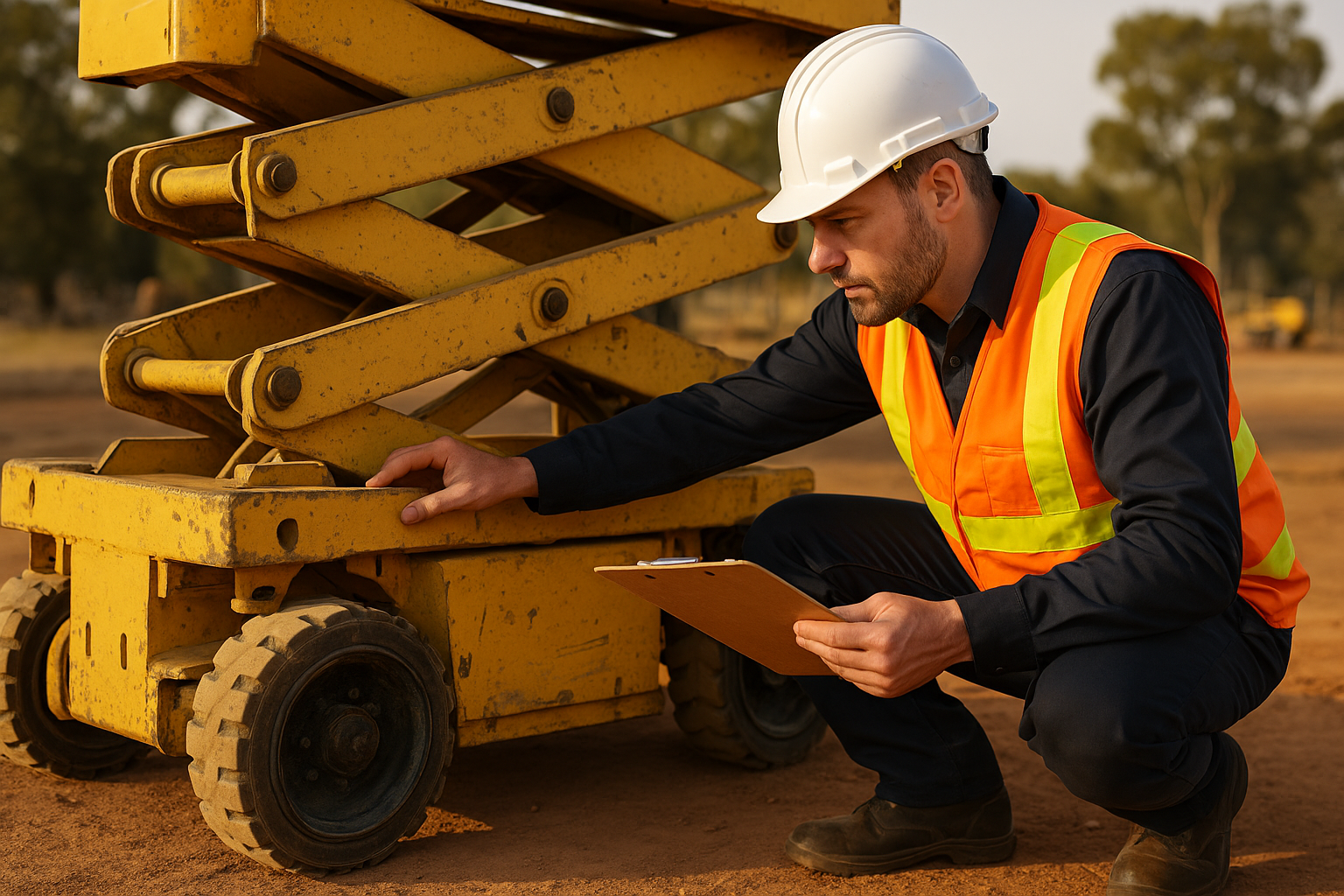
Before signing anything, inspect or arrange inspection of these seven areas:
Total machine hours
Under 2,000 hours is generally considered low use; over 4,000 hours warrants close scrutiny.
Service and maintenance records
Request logbooks or dealer service history; walk away if these don’t exist.
Compliance and certification status
Confirm the machine meets current AS/NZS 1418 series standards for mobile elevating work platforms.
Battery condition (electric models)
Battery replacement can cost $3,000–$8,000, so test capacity under load.
Engine condition (diesel models)
Check for oil leaks, smoke on startup, and service interval history.
Structural integrity
Look for cracks, weld repairs, or damage to scissor arms, platform rails, and the base frame.
EWPA yellow card inspection status
An inspection by an Elevated Work Platform Association-approved inspector provides independent verification of the machine’s condition and compliance.
New vs Used Scissor Lift: Head-to-Head Comparison
The table below summarises the key differences to help you assess your situation at a glance:
| Factor | New Scissor Lift | Used Scissor Lift |
|---|---|---|
| Purchase Price | Higher ($15,000–$90,000+) | Lower, often 30–60% less |
| Warranty | Yes, 1 to 2 years typical | Rarely included / very limited |
| Maintenance Costs | Low in early years | Potentially high, unpredictable |
| Compliance Risk | Minimal, current standards | Moderate to high, may need upgrades |
| Depreciation | High in year 1 (15–25%) | Already absorbed by previous owner |
| Finance Options | Broad, most lenders will fund | Limited, age/hours may disqualify |
| Residual Value | Predictable decline | Less room to fall further |
| Best For | Heavy/daily use, long-term fleet | Occasional use, budget-constrained buyers |
How Much Does It Cost to Hire a Scissor Lift Instead?
| Machine Type | Daily Rate | Weekly Rate | Monthly Rate |
|---|---|---|---|
| Electric scissor lift (up to 8m) | $180 – $280 | $600 – $950 | $1,800 – $2,800 |
| Electric scissor lift (8m–10m) | $250 – $380 | $850 – $1,400 | $2,500 – $4,000 |
| Diesel rough terrain (10m–14m) | $350 – $500 | $1,200 – $1,900 | $3,500 – $5,500 |
| Diesel rough terrain (14m+) | $450 – $650 | $1,600 – $2,500 | $4,500 – $7,000 |
Usually Included in Hire Rates
- Delivery and pickup within a standard radius
- Basic preventive maintenance
- Machine familiarisation on delivery
Usually Charged as Extras
- Insurance or damage waiver (often $20–$50/day)
- Fuel (diesel models)
- Operator certification checks
- Delivery beyond standard radius
Buying vs Hiring: Which Gives Better Value?
The answer depends entirely on how often you use the machine. As a general rule, buying becomes more cost-effective than hiring when you exceed approximately 100–120 days of use per year, though this varies based on the machine type and your specific hire rates.
The Break-Even Calculation: A Worked Example
Let’s use a realistic example for a mid-range electric scissor lift:
Purchase price (new): $38,000
Annual ownership costs (maintenance, insurance, storage): approx. $4,500/year
Daily hire rate: $300/day
Total cost of ownership over 5 years: $38,000 + ($4,500 × 5) = $60,500
Total hire cost at 100 days/year over 5 years: $300 × 100 × 5 = $150,000
At 100 days per year, hiring costs $150,000 over five years versus $60,500 to own. That’s a $89,500 difference in favour of buying.
Now flip it: if you only use the machine 30 days per year:
Hire cost over 5 years: $300 × 30 × 5 = $45,000
Buying still costs $60,500 and hiring wins.
For a deeper breakdown of the hire-vs-buy decision, IndustrySearch.com.au‘s buying guide provides a useful framework for modelling your specific situation.
When Hiring Makes More Sense
- You have project-based or seasonal work with no guaranteed pipeline beyond it
- You need a specific machine for a one-off job
- You have no storage facility for equipment between jobs
- You want compliance and maintenance managed by the hire company
- You need to preserve working capital, hire is operational expenditure, not capital
When Buying Makes More Sense
- You use a scissor lift more than 100 days per year
- You have a long-term project pipeline with reliable forward work
- You want to own an asset for depreciation and tax purposes
- You need guaranteed equipment availability without booking lead times
The Scissor Lift Value Scorecard: Which Option Is Right for You?
Answer the five questions below and tally your score to get a directional recommendation:
| Question | Score 1 | Score 2 | Score 3 |
|---|---|---|---|
| How often will you use it? | Less than 40 days/year | 40–100 days/year | More than 100 days/year |
| What’s your budget situation? | Limited, need low capex | Moderate, some capital available | Strong, can fund upfront |
| Do you have storage space? | No | Possibly | Yes |
| How long is your project horizon? | Under 1 year | 1–3 years | 3+ years |
| How important is warranty/compliance? | Not critical | Somewhat important | Essential |
Hire
You don’t use the equipment often enough or long enough to justify ownership. Scissor lift hire keeps your capital free and puts a compliant, maintained machine on site when you need it.
Consider Used
Buying makes financial sense, but a quality used machine at a lower entry cost may hit the right balance. Inspect carefully and verify service records before committing.
Buy New
Your usage, horizon, and compliance needs justify the premium for a new machine. See the full range of new machines available via Scissor Lift for Sale.
Frequently Asked Questions
Ready to Get the Right Machine for the Job?
Whether you’re looking to hire for a project or exploring ownership options, the BHS team can help you find the most cost-effective solution for your site requirements.
Enquire About Scissor Lift Hire