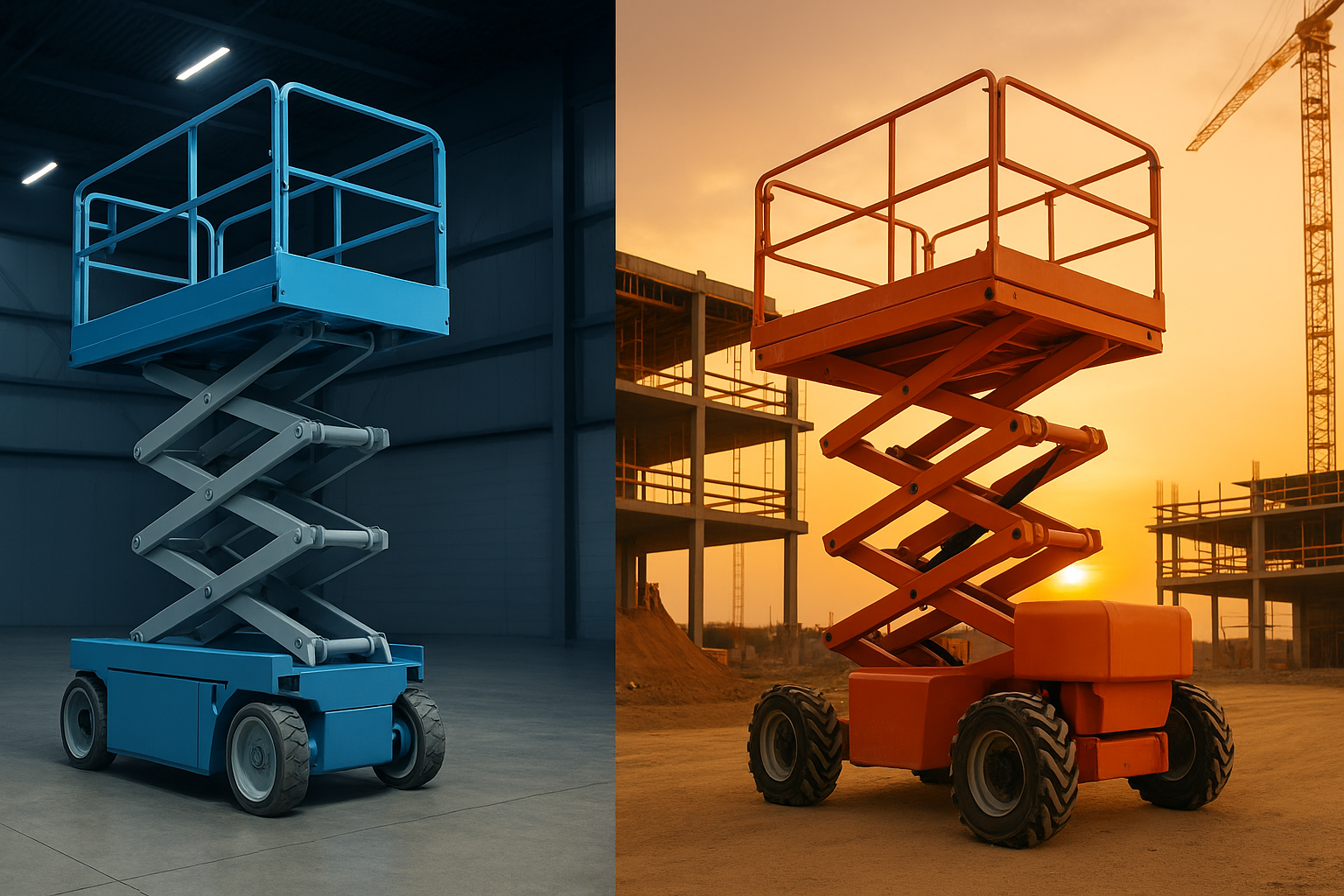
Electric vs Diesel Scissor Lifts: Key Differences Explained
Choosing between an electric and diesel scissor lift can significantly affect productivity, compliance, and cost on your worksite. Whether you’re planning an indoor commercial fit-out, managing a busy construction site, or comparing EWP hire options for your fleet, understanding the core differences between these two machine types is essential to making the right call.
This guide breaks down everything you need to know, from performance specs and running costs to Australian safety regulations and environmental obligations, so you can make a confident, informed decision.
Quick Answer Summary
Electric scissor lifts are battery-powered elevated work platforms (EWPs) designed primarily for indoor use on smooth, level surfaces. They produce zero direct emissions and operate quietly, making them ideal for warehouses, retail environments, and enclosed worksites.
Diesel scissor lifts are internal combustion engine-powered machines built for outdoor rough-terrain applications. They offer greater platform heights, higher load capacities, and the ability to operate on uneven or unpaved surfaces without the need for a power source to recharge.
What Is an Electric Scissor Lift?
An electric scissor lift is a battery-operated elevated work platform (EWP) that uses rechargeable batteries to power its drive, lift, and auxiliary functions. Designed primarily for indoor use, electric scissor lifts are the go-to choice for facilities maintenance, commercial construction fit-outs, warehousing, and any application where emissions and noise must be tightly controlled.
Modern electric scissor lifts have evolved significantly. Some newer rough-terrain electric models can handle light outdoor use on firm, relatively level ground, a useful middle-ground option for worksites with mixed access requirements.
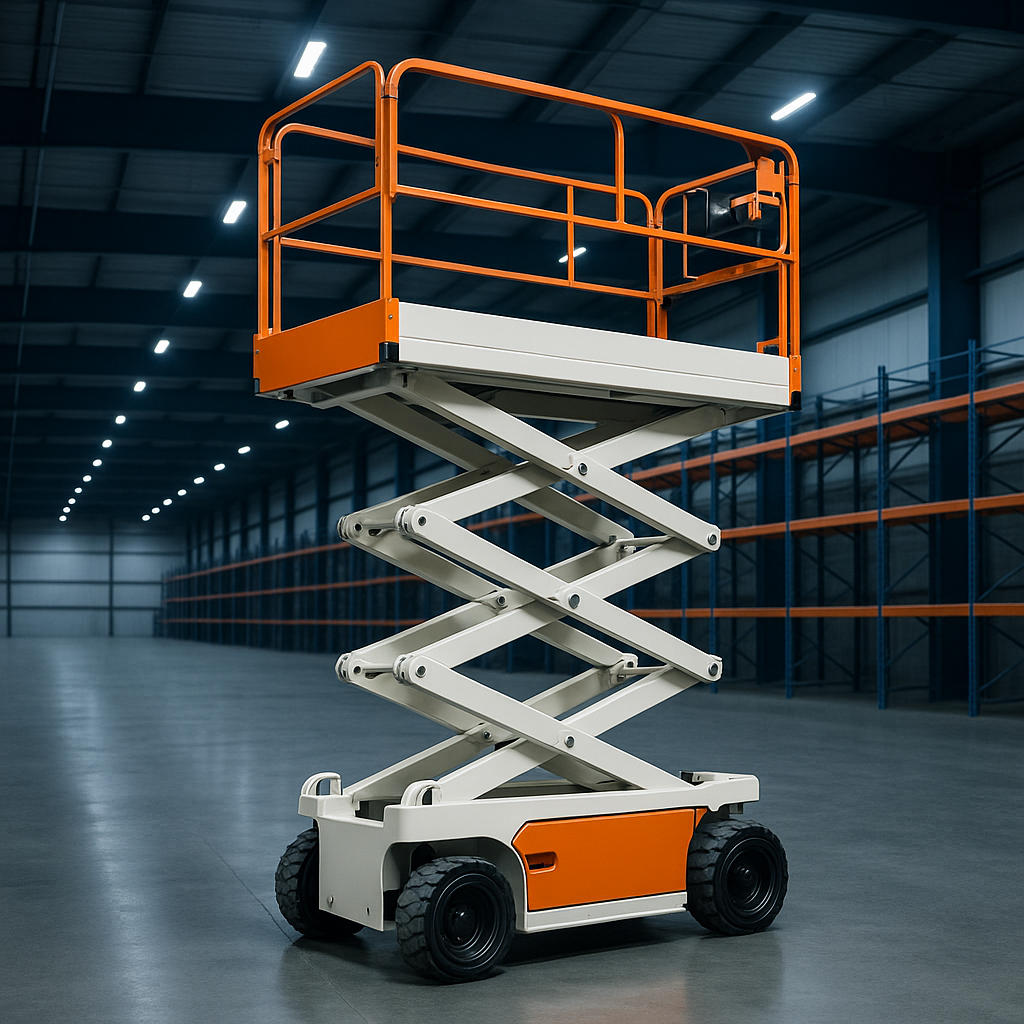
What Is a Diesel Scissor Lift?
A diesel scissor lift is a rough-terrain elevated work platform powered by an internal combustion engine, designed for outdoor use on uneven, unpaved, or demanding ground conditions. These machines are built for the tougher end of the worksite spectrum, civil construction, infrastructure projects, mining applications, and rural or remote locations where electric recharging isn’t practical.
Diesel scissor lifts are the workhorses of outdoor elevated access. Their power, robustness, and independence from electrical infrastructure make them indispensable on large-scale Australian construction and civil engineering projects.
Electric vs Diesel Scissor Lifts: Key Differences at a Glance
The table below provides a direct side-by-side comparison of the most important attributes across both machine types.
| Feature | Electric Scissor Lift | Diesel Scissor Lift |
|---|---|---|
| Power source | Rechargeable battery | Diesel (or LPG dual-fuel) engine |
| Best environment | Indoor / smooth paved surfaces | Outdoor / rough or uneven terrain |
| Terrain capability | Smooth, level surfaces; 25–30% gradeability | Rough, unpaved terrain; 30–45% gradeability |
| Emissions | Zero direct emissions | Exhaust: NOx, CO, particulate matter |
| Noise level | 60–70 dB (low) | 90–100 dB (high) |
| Typical working height | 6m–16m | 10m–20m+ |
| Platform load capacity | 230–450 kg | 450–680 kg+ |
| Fuel/running costs | Low (electricity per charge) | Higher (diesel fuel consumption per hour) |
| Maintenance complexity | Lower, fewer moving parts, no oil changes | Higher, engine servicing, fuel systems, filters |
| Indoor use (Australia) | Fully compliant | Restricted, exhaust fumes prohibited indoors under WHS legislation |
| Remote site use | Limited, requires mains power to recharge | Fully suitable, no recharging infrastructure needed |
| Indicative daily hire rate (AUD) | ~$150–$300/day | ~$250–$500/day |
The key differences come down to three factors: the work environment (indoor vs outdoor), terrain conditions (smooth vs rough), and compliance requirements (emissions and noise). These three criteria will guide most hiring or purchasing decisions in the Australian market.
When Should You Use an Electric Scissor Lift?
Electric scissor lifts are the best choice when working indoors or in environments with strict emissions and noise restrictions. If your worksite is enclosed, temperature-controlled, or subject to environmental or community expectations around air quality and noise, electric is almost always the right answer.
Choose an electric scissor lift when:
- Working indoors on commercial construction or fit-out projects: shopping centres, office buildings, hospitals, and schools where exhaust fumes would create a serious health and safety risk
- Operating in warehousing or logistics facilities: smooth concrete floors are ideal for electric models, and zero emissions protect workers from CO exposure in enclosed spaces
- Completing retail or facility maintenance: where minimising disruption to staff, customers, or the public is a priority
- Working in noise-sensitive environments: hospitals, aged care facilities, schools, and residential areas where noise management plans apply
- Meeting sustainability or ESG requirements: an increasing number of tier-1 Australian contractors now mandate low or zero-emission plant on their projects
- Operating on smooth, level paved or concrete surfaces: electric models are optimised for these conditions and perform reliably within their terrain parameters
When Should You Use a Diesel Scissor Lift?
A diesel scissor lift is the right choice when working outdoors on uneven, unpaved, or rough terrain where electric models cannot safely operate. If your site is a construction zone, a civil works project, a remote rural location, or anywhere that demands continuous operation without access to mains power, diesel is the practical and often the only viable option.
Choose a diesel scissor lift when:
- Working on outdoor construction or civil engineering sites: ground conditions, gradient, and debris make rough-terrain capability essential
- Operating at remote or rural sites: where 240V or three-phase power for battery recharging simply isn’t available
- Mining or resource sector applications: where machine robustness, extended operation hours, and load capacity are critical
- Large outdoor events or infrastructure projects: bridges, stadiums, utility infrastructure where working heights exceed typical electric model ranges
- Extended continuous operation is required: diesel machines can refuel in minutes and continue operating, unlike electric models that require several hours to recharge
- Heavy-duty lifting applications: where platform load requirements exceed what electric models can safely carry
Environmental and Safety Considerations in Australia
Environmental and safety compliance is not optional on Australian worksites, it’s a legal obligation, and the type of scissor lift you select directly affects your compliance exposure.
Electric Scissor Lifts: Environmental Benefits
- Zero direct emissions during operation, critical for indoor air quality and protecting workers from NOx, CO, and particulate matter
- Significantly lower noise output (60–70 dB) reduces the risk of noise-induced hearing loss and supports community noise management obligations
- Reduced carbon footprint when charged from renewable energy, increasingly relevant for organisations with emissions reporting requirements under the Australian Government’s climate disclosure frameworks
- Preferred by ESG-conscious contractors, major Australian construction firms are increasingly specifying low-emission plant as a contractual requirement
Diesel Scissor Lifts: Environmental and Safety Considerations
- Exhaust fumes are a serious indoor health hazard, diesel exhaust is classified as a Group 1 carcinogen by the WHO; its use in enclosed spaces is restricted under Australian WHS legislation
- High noise levels (90–100 dB) require mandatory hearing protection and may trigger community noise complaints, relevant for urban construction sites under state EPA noise regulations
- Fuel spill risk must be managed on environmentally sensitive sites, including near waterways or in proximity to protected land
Australian Regulatory Context
Key standards and codes that apply to scissor lift operation in Australia include:
- Safe Work Australia: Code of Practice: Managing Risks of Plant in the Workplace
- AS 2550.10: Australian Standard for the safe use of cranes, hoists, and EWPs
- State-based WHS regulators: WorkSafe Victoria, SafeWork NSW, WorkSafe Queensland, and equivalent bodies in other states all publish specific EWP guidance
- State EPA regulations: applicable to construction site noise and emission management in residential and urban environments
Cost Comparison: Electric vs Diesel Scissor Lifts
For equivalent working height ranges, electric scissor lifts are generally comparable to or slightly lower in purchase price than diesel models. In the Australian hire market, indicative daily rates are approximately:
Weekly and monthly rates offer significant discounts for longer-term projects, always request extended-hire pricing for projects running longer than a few days.
Electric scissor lifts are substantially cheaper to operate on a per-hour basis compared to diesel equivalents. The cost of electricity to fully charge a modern electric scissor lift is a fraction of the diesel fuel consumed over the same operating period.
Diesel scissor lifts typically consume 2–4 litres of fuel per hour under working conditions. At current Australian diesel retail prices (reference the Australian Institute of Petroleum for current figures), operating costs can add up quickly on long-running projects, particularly relevant when comparing total project costs rather than just daily hire rates.
Electric scissor lifts have significantly lower maintenance requirements than diesel models:
- No engine oil changes, no fuel filters, no exhaust system servicing
- Fewer mechanical components mean fewer failure points
- Estimated maintenance savings of 20–30% over a 5-year period compared to diesel equivalents
Diesel scissor lifts require regular engine servicing, oil and filter changes, fuel system maintenance, cooling system checks, and exhaust system inspections. These costs accumulate significantly over a machine’s working life.
The one lifecycle cost consideration for electric models is battery replacement, typically required every 5–7 years. This should be factored into total cost of ownership calculations when comparing purchase (rather than hire) options.
Practical Considerations for Australian Worksites
Beyond the core electric vs diesel scissor lift comparison, several Australia-specific factors deserve attention before you commit to a machine type.
Licencing Requirements
Operating an EWP with a boom length of 11 metres or more requires a High Risk Work Licence (HRWL), EWP class in most Australian states and territories. This applies regardless of whether the machine is electric or diesel. Confirm your operators hold the appropriate licence before work commences. For platforms under 11 metres, documented training is still required under WHS legislation.
Ground Conditions and Bearing Pressure
Australian construction sites vary enormously, from hard-packed compacted fill to softer ground near waterways or in older urban areas. Always verify the ground bearing pressure rating of your chosen machine against actual site conditions. Outrigger and stabiliser loads can be significant on larger diesel models.
Climate and Temperature
Australia’s extreme heat can affect the performance and cycle life of electric scissor lift batteries. In very high ambient temperatures, battery capacity and runtime may be reduced. Diesel engines perform more consistently across a wider temperature range, making them more predictable on exposed outdoor sites in Australian summer conditions.
Remote Site Access
For sites across regional and remote Australia where 240V or three-phase power infrastructure is unavailable or unreliable, diesel is the practical default. The logistical challenge of recharging an electric fleet on a remote Northern Territory or Western Australian site is not insignificant.
Sustainability Reporting Obligations
If you’re working as a subcontractor to a tier-1 builder, check their project environmental management plan. Many major Australian contractors now include low-emission or zero-emission plant requirements as a project specification, not meeting this can affect your subcontract compliance status.
Frequently Asked Questions
Need the Right Scissor Lift for Your Worksite?
Talk to the Brisbane Scissor Lift Hire team about your working height, site conditions, terrain, and project requirements to find the most suitable machine for the job.
Talk to Our Team