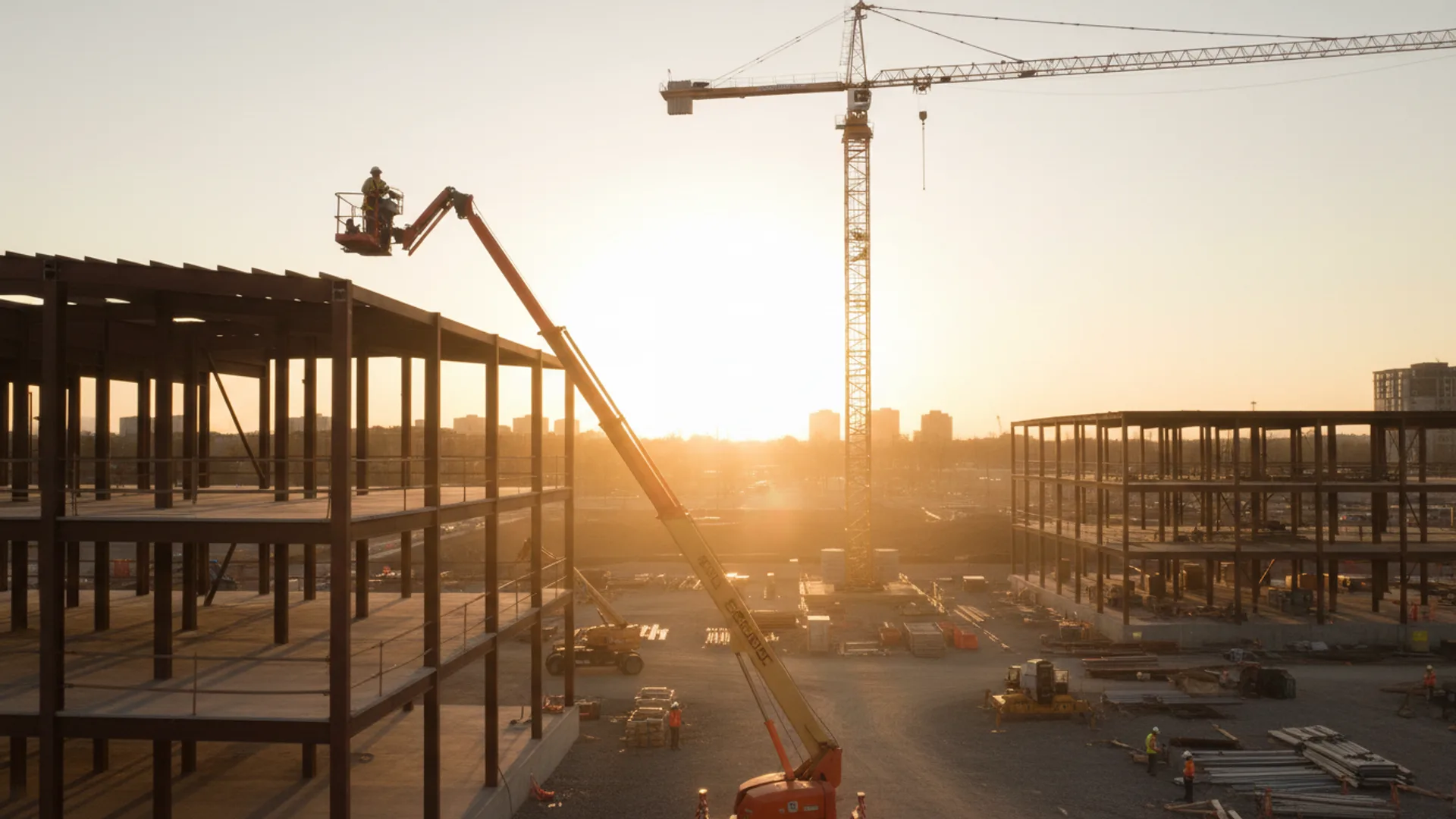
Boom Lift Guide: Uses, Types, and Safety Features Explained
Everything you need to know — from choosing the right type to staying compliant on site
Get a QuoteBoom lifts are a class of aerial work platform (AWP) designed to elevate workers and their equipment to heights that would be impractical or unsafe to reach by other means. Unlike scissor lifts, which move only vertically, boom lifts offer both vertical and horizontal reach — making them indispensable across construction, maintenance, utilities, and events industries.
Whether you are assessing equipment for a commercial build, managing an industrial maintenance schedule, or simply trying to understand how boom lifts work before booking a hire, this guide covers everything you need to know — from core components and types, to safety systems, licensing requirements, and selection criteria.
What Is a Boom Lift?
A boom lift is a type of elevated work platform (EWP) that uses a hydraulic arm — the “boom” — to raise a work basket or platform to heights typically ranging from 10 metres to over 60 metres. The term “boom” refers to the extendable arm that supports the work platform, and it is this arm that distinguishes boom lifts from scissor lifts or other elevated access equipment.
Boom lifts are self-propelled, meaning the operator can drive the machine from the ground (or in some models, from the platform) to position it precisely. They sit on a wheeled or tracked chassis and are powered by electric motors, diesel engines, or hybrid systems depending on the application and environment.
Main Components of a Boom Lift
-
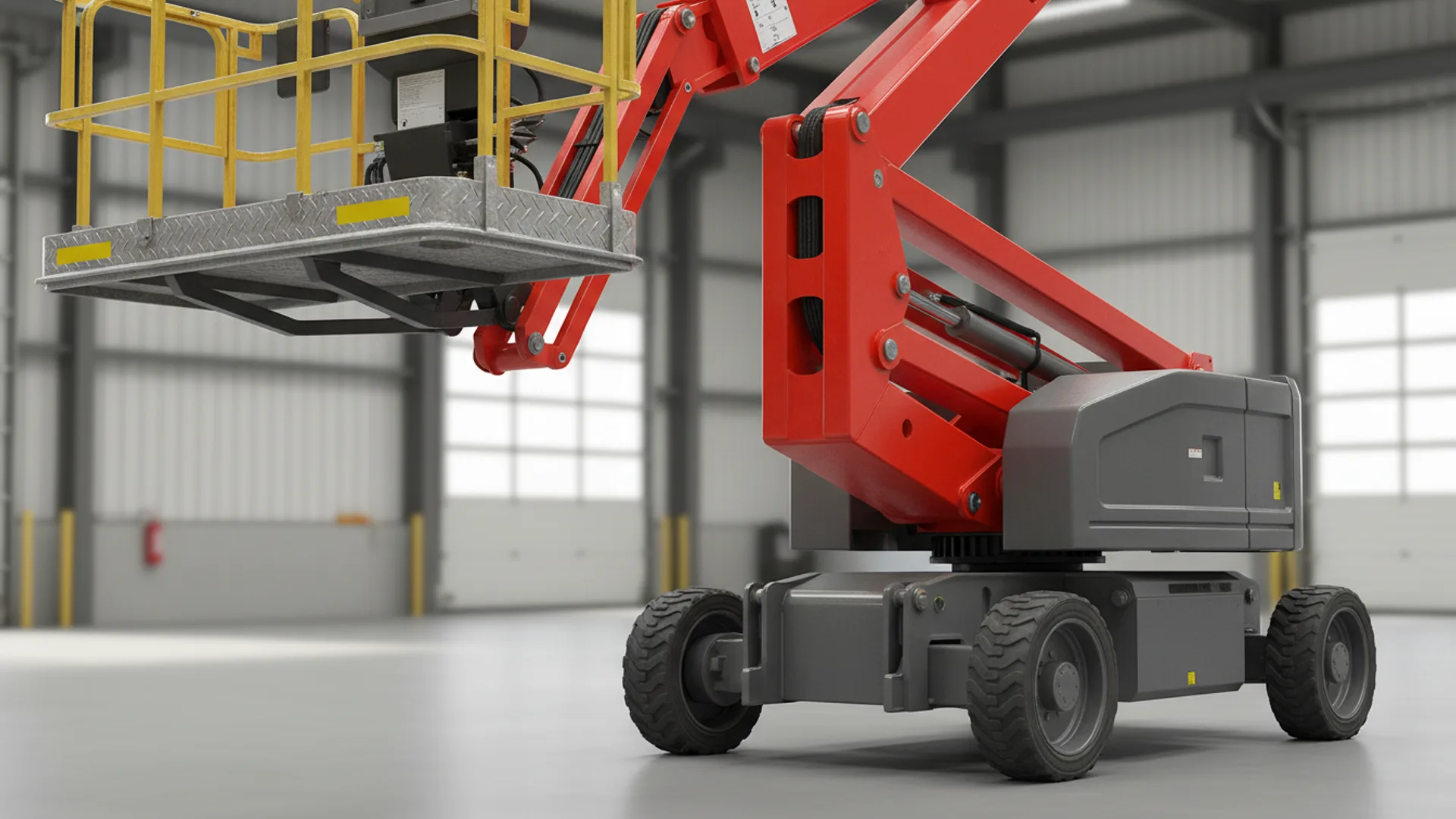
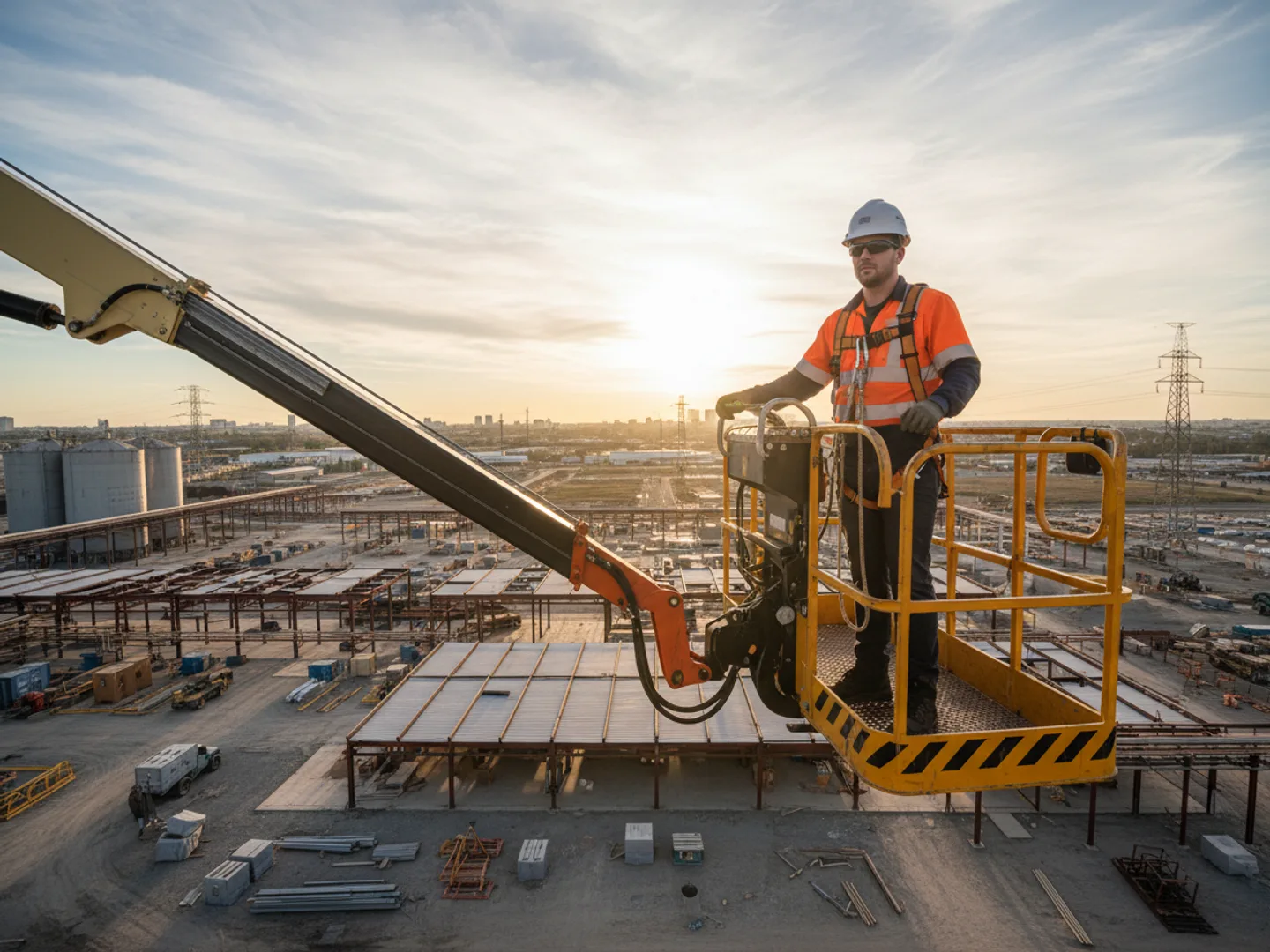
Work Platform / BasketThe enclosed cage or open platform where the operator and tools are positioned at height. Fitted with guardrails, controls, and anchor points for fall arrest harnesses.
-
Boom ArmThe extendable or articulating arm that lifts and positions the platform. May be a single straight section (telescopic) or multiple jointed sections (articulating / knuckle).
-
Rotating TurretSits atop the ground drive unit and allows the boom arm to rotate a full 360 degrees, giving the operator continuous horizontal reach without repositioning the machine.
-
Ground Drive UnitThe wheeled or tracked base of the machine. Houses the engine or motor, hydraulic systems, and drive controls.
-
Power SourceElectric (battery), diesel, hybrid, or bi-energy systems. Power source choice is determined by the work environment.
What Is a Boom Lift Used For?
Boom lifts are used wherever workers need to access height with flexibility, stability, and safety. Their combination of vertical reach and horizontal outreach makes them far more versatile than static access equipment such as scaffolding or ladders.
Boom lifts are a staple on commercial and residential construction sites — used for erecting structural steelwork, installing cladding and facades, placing mechanical and electrical services at height, and accessing rooflines. Their ability to operate on rough terrain makes them particularly suited to active construction environments.
Electric boom lifts are used for maintenance tasks such as replacing high-bay lighting, maintaining racking structures, repairing roof fixtures, and accessing mezzanine or high-shelf areas that forklifts or scissor lifts cannot easily reach.
Power line maintenance, telecommunications tower servicing, streetlight installation, and bridge inspections all require the precise elevated access that boom lifts provide. Insulated (IEL-rated) boom lifts are designed specifically for live electrical work.
The entertainment industry uses boom lifts to position cameras, lighting rigs, and rigging equipment at height. At outdoor concerts, sporting events, and film sets, boom lifts provide stable, manoeuvrable elevated platforms for crew who need to quickly reposition during production.
Building managers rely on boom lifts for HVAC servicing, facade cleaning, window replacement, signage installation, and fire system maintenance. Accessing multiple building levels without scaffolding makes boom lifts cost-effective for ongoing maintenance programmes.
Tree surgeons and arborists use tracked and rough-terrain boom lifts to access tree canopies for pruning, removal, and health inspections. Operating on soft or uneven ground without damaging root systems makes boom lifts the preferred solution for large-scale arboricultural work.
Why Use a Boom Lift Instead of Scaffolding or Ladders?
-
Speed of DeploymentA boom lift can be driven on site, positioned, and operating in minutes. Scaffolding requires days or weeks of erection time and dedicated labour, adding substantially to project costs and timelines.
-
FlexibilityBoom lifts can be repositioned multiple times throughout a working day, allowing a single machine to serve multiple access points across a site. Scaffolding is fixed; ladders limit the operator to a single, narrow work position.
-
Safety for Isolated TasksThe enclosed platform with integrated guardrails and anchor points provides a stable, protected work environment. Ladders require three points of contact and provide no fall containment.
-
Cost-EffectivenessFor short-duration, high-access tasks, hiring a boom lift is significantly more cost-effective than procuring, erecting, and dismantling scaffolding. Daily and weekly hire rates mean you pay only for the time you need the equipment.
Types of Boom Lifts Explained
Boom lifts are broadly divided into two main categories: articulating boom lifts and telescopic boom lifts. Each has distinct mechanical characteristics, performance profiles, and ideal use cases.
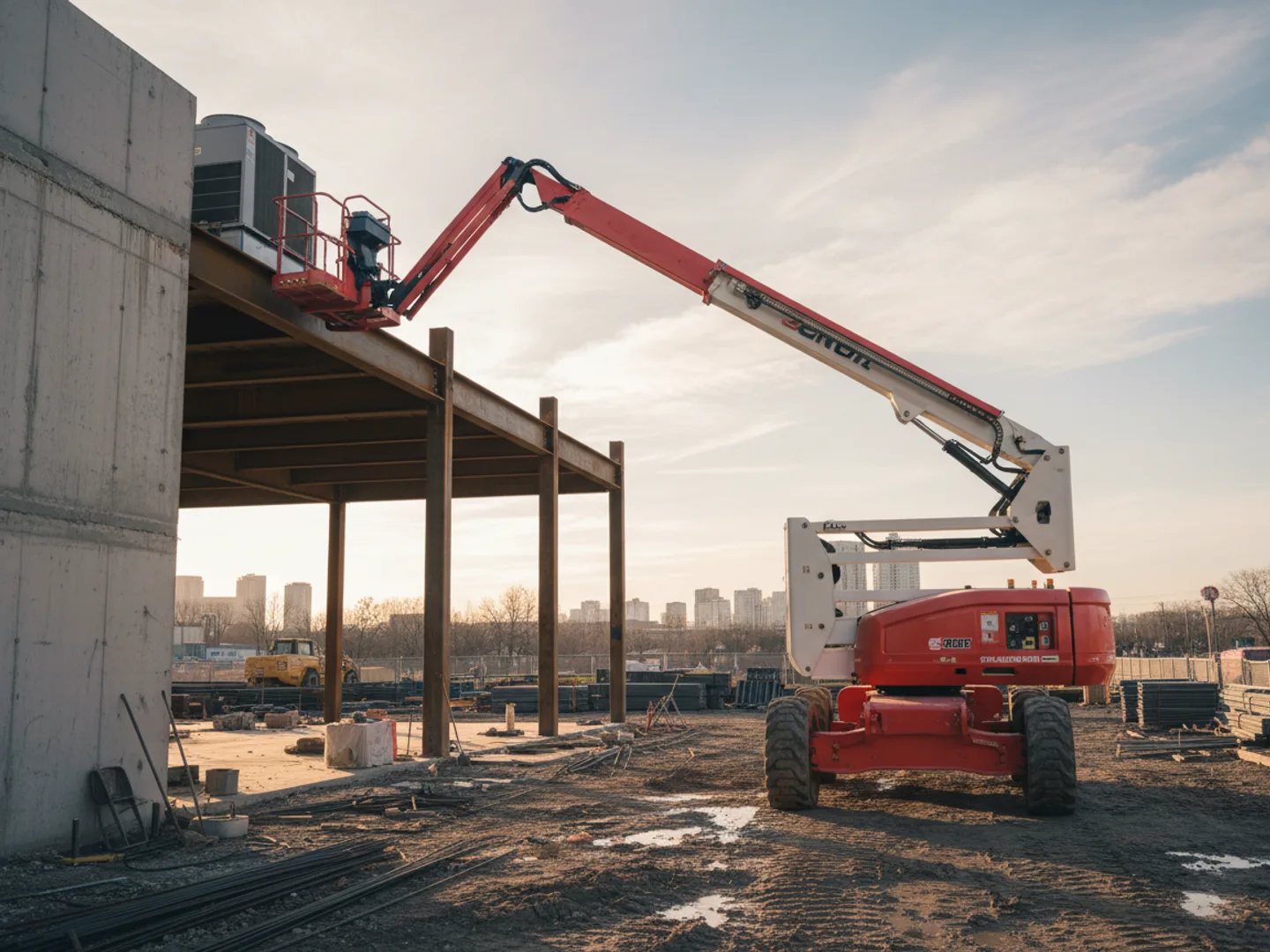
Uses multiple boom sections connected by pivot joints, allowing the boom to fold around obstacles, reach over barriers, and access positions that a straight boom cannot.
Complex environments with overhead obstructions, confined spaces, or multiple access points.
10m to 30m working height
Industrial maintenance, building exterior work, indoor structural access, bridge underside inspection.
- Reach up, over and around obstacles
- Greater versatility in complex environments
- Electric variants for indoor use
- Compact footprint relative to reach
- Lower max height vs telescopic
- Slower — multiple joint movements
- More complex hydraulic systems
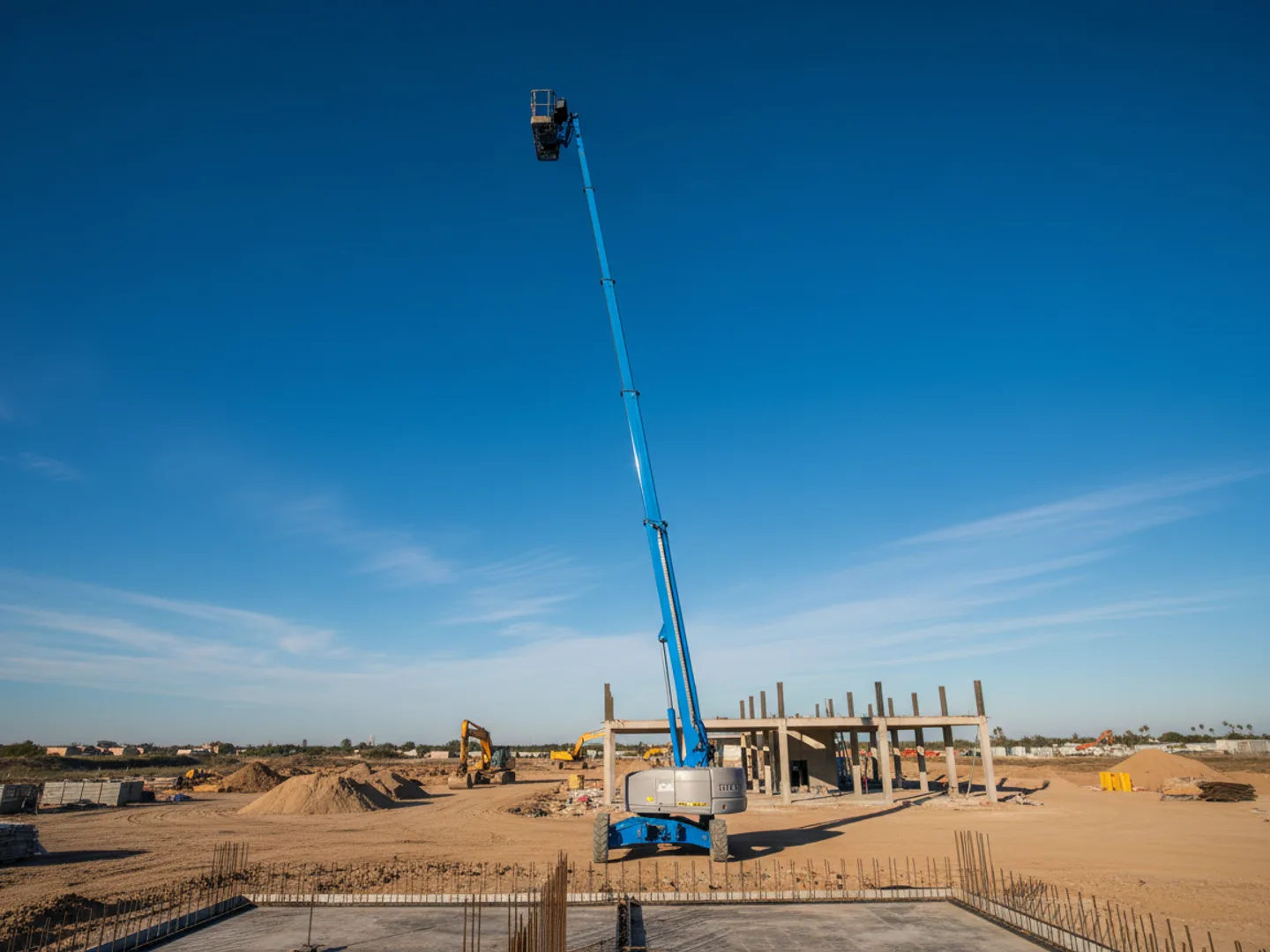
Uses a single arm extending telescopically from the base with no pivot joints mid-boom. Prioritises maximum horizontal and vertical reach over positioning flexibility.
Open environments, large construction sites, maximum outreach to a single work point without obstacles.
15m to 60m+ working height
High-rise construction, powerline maintenance, telecommunications tower work, large outdoor infrastructure.
- Greater max working height and outreach
- Faster boom — single linear extension
- Simpler hydraulics — lower maintenance
- Higher load capacity at elevation
- Cannot reach around obstacles
- Requires clear line of extension
- Larger footprint — less suited to confined sites
Articulating vs Telescopic — Side-by-Side Comparison
| Feature | Articulating (Knuckle) Boom | Telescopic (Straight) Boom |
|---|---|---|
| Boom Design | Multiple jointed sections | Single extending arm |
| Obstacle Avoidance | Excellent — can bend around barriers | Limited — requires clear line of sight |
| Max Working Height | Typically 10m – 30m | Typically 15m – 60m+ |
| Horizontal Outreach | Moderate — depends on joint configuration | High — full boom length as outreach |
| Best Environment | Complex, confined, or indoor sites | Open outdoor sites and high-reach jobs |
| Deployment Speed | Slower — multiple joint movements | Faster — single linear extension |
| Typical Platform Capacity | 230kg – 350kg | 350kg – 450kg |
Power Source Comparison
| Power Type | Best For | Key Advantage |
|---|---|---|
| Electric | Indoor, enclosed, emission-sensitive sites | Zero exhaust emissions, low noise, suitable for food-grade and clean environments |
| Diesel | Outdoor construction, rough terrain, remote locations | High power output, no recharging required, robust in all weather |
| Hybrid | Mixed indoor/outdoor, multi-shift operations | Reduced emissions vs pure diesel; eliminates range anxiety of pure electric |
| Bi-Energy | Sites requiring indoor and outdoor operation | Switch between diesel (outdoor) and electric (indoor) modes on demand |
Essential Safety Features of Modern Boom Lifts
Modern boom lifts are engineered with multiple integrated safety systems to protect operators from falls, tip-overs, entrapment, and unauthorised use.
How to Choose the Right Boom Lift
Selecting the correct boom lift requires a structured assessment of the work task, the site environment, and regulatory requirements. Work through this six-step process before finalising your hire or purchase decision.
-
1Define Your Working HeightIdentify the highest point you need to reach and add a minimum 1.5m for the operator’s reach from the platform. Manufacturers typically measure to the platform floor, not to the extended reach of a standing operator.
-
2Assess Horizontal Reach RequirementsIf there are walls, structures, or overhead obstacles between the machine and the work point, you will need an articulating boom. If you have a clear, unobstructed path, a telescopic boom’s superior outreach may be more suitable.
-
3Evaluate the Site EnvironmentAssess ground conditions: level or sloped, hard or soft, indoor or outdoor? Electric boom lifts are required for most indoor environments. Diesel or rough-terrain models suit outdoor sites with uneven or soft ground.
-
4Select the Appropriate Power SourceElectric for indoor or emission-controlled sites; diesel for heavy outdoor construction; hybrid or bi-energy for machines working across both environments. Consider charging infrastructure for long-duration electric hire.
-
5Check Platform Load CapacityCalculate the total live load: combined weight of all operators (typically 90–100kg per person), plus tools and materials. This total must not exceed the machine’s rated capacity. An overloaded boom lift is illegal and severely increases tip-over risk.
-
6Consider Site Access and LogisticsCheck door heights, gate widths, ramp gradients, and weight restrictions. Larger telescopic boom lifts may require a wide delivery vehicle and adequate lay-down space. Compact articulating booms are available for restricted access sites.
- Prioritise: Electric power, non-marking tyres, compact width to navigate aisle structures
- Look for: Proportional controls, platform rotation for lateral reach, rated indoor usage classification
- Check: Floor loading limits — boom lifts are substantially heavier than scissor lifts and may require structural assessment
- Prioritise: Rough-terrain capability (4WD, large tyres), adequate working height, diesel power for outdoor performance
- Choose type: Telescopic for maximum height on open sites; articulating for complex structures with multiple access points
- Check: Machine dimensions vs site access, delivery vehicle requirements, and compliance with the plant register
Safety: Operator Guidelines & Compliance
Operating a boom lift in Australia is a licensed activity. All operators must hold the correct class of High Risk Work Licence (HRWL) and complete a documented pre-use inspection before each shift.
Operator Certification (Australia)
Operating a boom lift (classified as a Boom-type Elevated Work Platform) requires a High Risk Work Licence (HRWL) with the EWP class designation:
- WP Class Licence — Required for articulating and telescopic boom lifts with a boom length of 11 metres or greater.
- Training and Assessment — Completed through an accredited Registered Training Organisation (RTO). Practical assessment on a real boom lift is required.
- Licence Renewal — HRWL licences must be renewed before expiry. Operating with an expired licence is a safety offence and may void insurance coverage.
- Site Induction — Even licenced operators must complete the site-specific EWP induction covering the hazard register, emergency procedures, and site-specific restrictions.
Pre-Use Inspection Checklist
Before every shift, the operator must conduct a documented walk-around pre-use inspection covering:
- Structural integrity — Check boom arm sections, platform rails, and chassis for cracks, deformation, or damage.
- Hydraulic system — Check for visible oil leaks on hoses, cylinders, and fittings. Do not operate a machine with hydraulic leaks.
- Tyres and wheels — Inspect for cuts, bulges, foreign objects, and correct inflation. Check wheel nuts are secure.
- Controls and safety systems — Test all platform and ground controls, emergency stop, deadman switch, tilt alarm, and emergency lowering function before elevating.
- Fuel / battery level — Confirm adequate fuel or battery charge for the planned work duration. Arrange refuelling or recharging before commencing if levels are insufficient.
- Documentation — Confirm the machine’s service logbook, registration (if applicable), and the operator’s HRWL are all current. Record the inspection on the inspection sheet.
Need a Boom Lift in Brisbane?
We hire articulating and telescopic boom lifts across Brisbane and surrounds. Fast delivery, compliant machines, expert advice.
Get a Free Quote